Telefono: 379 14 89 430
Orari: Monday to Friday, 9:00 a.m. to 6:00 p.m.



Telefono: 379 14 89 430
Orari: Monday to Friday, 9:00 a.m. to 6:00 p.m.
IoT Consulting and Industry 4.0: practical guide for companies that want to innovate
24 November 2026
What IoT and Industry 4.0 really mean for your business
Behind acronyms like IoT and Industry 4.0 lies a fundamentally simple idea: giving machines and objects the ability to gather information and share it. IoT stands for "Internet of Things": it means connecting networks of equipment, plants, and devices that previously operated in isolation. Industry 4.0 is how this approach transforms the factory floor and production processes, turning data and connections into smarter decisions.
To understand it in practical terms, imagine machinery equipped with small sensors. These sensors measure concrete things: temperature, vibrations, energy consumption, number of units produced. The collected data doesn't stay locked inside the machine—it gets transmitted and made readable. The result is that your company stops flying blind and begins to see with precision what's happening in your processes.
The benefits are very practical and almost always translate into saved time and money:
- Predictive maintenance: you service equipment before it breaks down, reducing unexpected downtime.
- Consumption monitoring: you spot energy and material waste and cut costs.
- Consistent quality: data immediately alerts you when something goes outside expected parameters.
- Faster decisions: having up-to-date numbers lets you understand where to act without wasting time.
It's important to clarify one thing so you don't get intimidated by the subject: you don't need to transform your entire company overnight. Often you start with a single piece of equipment or a specific problem that's costing you money, and build from there. What really makes the difference is the technology foundation everything rests on.
That foundation is the electronics that let sensors and devices work and communicate reliably. This is where electrical design becomes concrete: building the components that capture signals and make them usable is the prerequisite for IoT and Industry 4.0 to stop being buzzwords and become a measurable advantage for your business.
Measurable benefits: from predictive maintenance to production efficiency
The real test of any IoT project isn't the technologies you adopt, but the numbers they deliver. For a business owner or production manager, the decisive question is straightforward: how much does it save me and how much does it make me earn? The good news is that today's Industry 4.0 benefits can be quantified with precision, because they come directly from data collected in the field.
Let's look at the most concrete use cases—the ones that deliver measurable return on investment in months, not years.
- Predictive maintenance: sensors on motors, bearings and moving parts detect vibrations, temperature and unusual consumption patterns. This allows you to intervene before failure occurs, reducing unplanned downtime and extending equipment lifespan. In many production environments, unexpected shutdowns cost more than repairs themselves.
- Real-time equipment monitoring: keeping control over the status of every production line allows you to spot bottlenecks and performance drops that would otherwise go unnoticed. The OEE indicator (overall equipment effectiveness) becomes live data, not a monthly estimate.
- Product and batch traceability: knowing where every component is in the process reduces errors, waste and disputes, and simplifies compliance with customer requirements and regulations. This translates directly into improved perceived quality.
- Energy savings: measuring consumption machine by machine uncovers concrete waste, like equipment running idle. Often the quickest efficiency gains are hidden here.
There's one common thread running through all these cases: without reliable data from the field, optimization is impossible. And this is exactly where the quality of your electronics makes the difference. Well-integrated sensors, circuit boards designed for real working environments and robust data acquisition systems are the foundation on which all these benefits rest.
Our electronics design service works at precisely this level: creating custom hardware that makes it possible to collect the right data, in the right place and consistently over time. It's the technical prerequisite for turning measurable benefits from theory into concrete results for your business.
You can't improve what you don't measure: the first investment in Industry 4.0 is making measurable what today is not.
How to Launch an IoT Project: The Phases of an Effective Consulting Engagement
An IoT project doesn't start with technology, but with the right questions: which processes do we want to improve, what data do we actually need, and what return should we expect. A well-structured consulting journey translates these objectives into concrete steps, reducing risks and unnecessary investments. Here are the typical phases that guide a company from idea to results.
- Process analysis: observing how the company actually operates, identifying bottlenecks, and defining measurable objectives (such as reducing machine downtime or monitoring consumption). This is when you decide where IoT creates real value.
- Selection of sensors and connectivity: based on what needs to be measured, the right sensors are chosen along with the best way to transmit data. Reliability, management costs, and compatibility with existing systems matter here.
- Data collection and management: defining how to continuously and systematically acquire information so it can be read, compared, and transformed into actionable insights for decision-makers.
- Integration with business systems: the collected data is connected to tools already in use (ERP systems, production management systems), avoiding information silos and duplicate work.
In this journey, the most delicate step is often the technical one: turning a requirement into a device that works reliably in the actual production environment. This is where custom electronics design becomes critical, as it enables the development of solutions tailored to the company's specific needs, rather than forcing standard products that weren't designed for that particular use case.
A successful IoT project isn't measured by the number of sensors installed, but by the quality of decisions it enables you to make.
The value of effective consulting lies in guiding your business through every step without shortcuts: first you understand the problem, then you build a custom solution. At RENOR we support companies throughout this entire journey, providing electronics design expertise to make each phase concrete and sustainable over time.
From hardware to platform: electronics, connectivity and integrated software
A valuable IoT project doesn't stop at the single device or the dashboard that displays the data. The result comes from a continuous chain that starts with a physical sensor in the field and leads to the useful information that ends up on the desk of whoever needs to make decisions. If even one link in this chain is weak, the entire system loses reliability: inaccurate data, unstable connections, or poorly scalable software undermine the investment, no matter how good the original idea.
It's therefore worth thinking in layers, because each one requires different skills but must communicate with the others seamlessly.
- Device and electronics: the point where data originates. Sensors, boards and components must be chosen and designed based on the real-world environment, power consumption and expected lifespan.
- Connectivity: how data travels from the field to the central system, using technologies that match distances, interference and information volumes to be transmitted.
- Software and cloud: where data is collected, processed and transformed into readable indicators, alerts and reports that drive operational decisions.
The critical point, often overlooked, is precisely the electronics. An off-the-shelf device purchased from a catalog rarely fits the specific needs of a production process exactly. This is where custom electronics design comes in, allowing you to build the right hardware for the context: the device that captures data at the source, in the format and with the reliability that the rest of the chain requires. Starting with hardware designed for the purpose reduces downstream problems and makes the entire system more robust over time.
For a company, the practical implication is straightforward: working with a single partner capable of covering the entire chain, from device design to the software that unlocks the value of data, avoids the typical risks of projects fragmented across different suppliers. It means clear responsibility, guaranteed integration between components and more predictable timelines, without chasing compatibility between parts built separately.
An IoT project truly works only when data, device and platform are designed together, not assembled together afterward.
Common challenges and how to overcome them: security, integration, and expertise
Many companies postpone innovation projects not out of lack of interest, but due to legitimate concerns. Anticipating these obstacles is the first step to facing them without surprises. Three barriers come up repeatedly: data security, integration with existing management systems, and lack of internal skills.
Data security
Connecting machinery and sensors to your network creates new entry points. The risk shouldn't be ignored, but neither should it be overstated to the point of blocking every initiative. Security is built into the design from the start: choosing reliable communication protocols, network segmentation, controlled device updates, and clear rules about who can access what information. Treating protection as a core requirement rather than a final add-on dramatically reduces vulnerabilities.
Integration with existing systems
The fear of having to replace management platforms, ERPs, or production software is often unfounded. A well-designed project doesn't overturn what already works—it connects to it. The goal is to make new devices talk to the tools your company uses every day, eliminating data duplication and manual data entry. This requires careful hardware design that takes into account compatibility between hardware, connectivity, and your existing IT systems from the outset.
Lack of internal expertise
Few organizations have all the necessary skills in-house: electronics, software, networks, and data analytics. That's normal, and it shouldn't hold you back. Specialized consulting bridges this gap in two ways: it handles the most complex parts and, at the same time, transfers the knowledge your team needs to manage the solution over time.
None of these obstacles is insurmountable: they only become critical when you face them in an improvised way, without a holistic vision.
In short, security, integration, and expertise are not reasons to give up on innovation, but aspects to plan carefully. Working with a partner who guides you through the entire journey—from hardware design to implementation—turns initial doubts into a solid, sustainable project.
Where to start: tailored consulting for your business
After exploring the real benefits of IoT and the phases of a well-structured project, the most important question remains for business leaders: how do you actually begin? The answer isn't a off-the-shelf product, but a path built around your company's real needs. Every manufacturing operation has different machinery, processes, and priorities: effective consulting starts right here, with listening and understanding what you already have, before proposing any solution.
The first step requires neither major investments nor rushed decisions. It's an initial assessment that captures your current situation, identifies areas where innovation can deliver measurable returns, and defines a realistic, sustainable roadmap—even for those without in-house technical expertise.
At this stage, it becomes crucial to have a partner who can cover the entire value chain, without fragmenting your project across multiple vendors. From electronic design of devices that collect field data, to software development and IT consulting that ties everything together, continuity across these capabilities is what transforms an idea into a functioning, reliable system.
- Analysis of processes and machinery already in place at your company
- Identification of areas with the highest return on investment
- Custom electronic design of devices tailored to your needs
- Software development and integration with existing systems
- Ongoing IT support to grow your project over time
Innovation doesn't mean overhauling everything at once, but taking the first step with clarity and a partner capable of guiding you throughout the journey. At RENOR we bring together electronic design, software development, and IT consulting under one roof, so we can offer you an integrated and concrete vision from your very first assessment.
If you want to understand what opportunities IoT and Industry 4.0 can offer your business, get in touch for an initial evaluation: we'll start from your goals and build a tailored, sustainable, results-driven roadmap together.
Need concrete support? Discover our Electronic design service or contact us for a consultation.
Author

Simone Renzi
CEO at RENOR & Partners
Latest published articles
Tuesday, 24 November 2026
IoT Consulting and Industry 4.0: practical guide for companies that want to innovate
What IoT and Industry 4.0 really mean for your businessBehind acronyms like IoT and Industry 4.0 lie...
Pubblicato da Simone Renzi
Tuesday, 17 November 2026
AI Integration in Business Processes: How to Choose the Right Provider in Italy
What it really means to integrate AI into business processesIntegrating artificial intelligence does...
Pubblicato da Simone Renzi
Tuesday, 10 November 2026
Artificial Intelligence Consulting for Businesses: How to Choose and What to Expect
What AI consulting really means for a businessWhen people talk about artificial intelligence consult...
Pubblicato da Simone Renzi
Potrebbero interessarti anche
Tuesday, 18 August 2026
3D Printing Service for Companies: How It Works and When It’s Worth It
What is third-party 3D printing and who needs itThird-party 3D printing is a service where a company outsources the production of ...
Pubblicato da Simone Renzi
Monday, 17 August 2026
Software for managing business IoT devices: selection guide
Why Your Business Needs IoT Device Management SoftwareWhen a company has just a few connected devices, keeping them under control ...
Pubblicato da Simone Renzi
Sunday, 16 August 2026
Quote for an industrial telemetry system: what affects costs
What is an industrial telemetry system and what is it used forAn industrial telemetry system is a collection of devices and techno...
Pubblicato da Simone Renzi
Tuesday, 11 August 2026
How Much Does It Cost to Develop a Custom IoT Platform for Your Business
What Is a Custom IoT Platform (and Why Build One Tailored to Your Needs)An IoT platform is the set of components that allows physi...
Pubblicato da Simone Renzi
Monday, 06 July 2026
Electronic Design in Italy: Guide for Companies Developing New Products
What is electronic design and why it's strategic for your businessElectronic design is the process that transforms a product ...
Pubblicato da Simone Renzi
Sunday, 25 May 2025
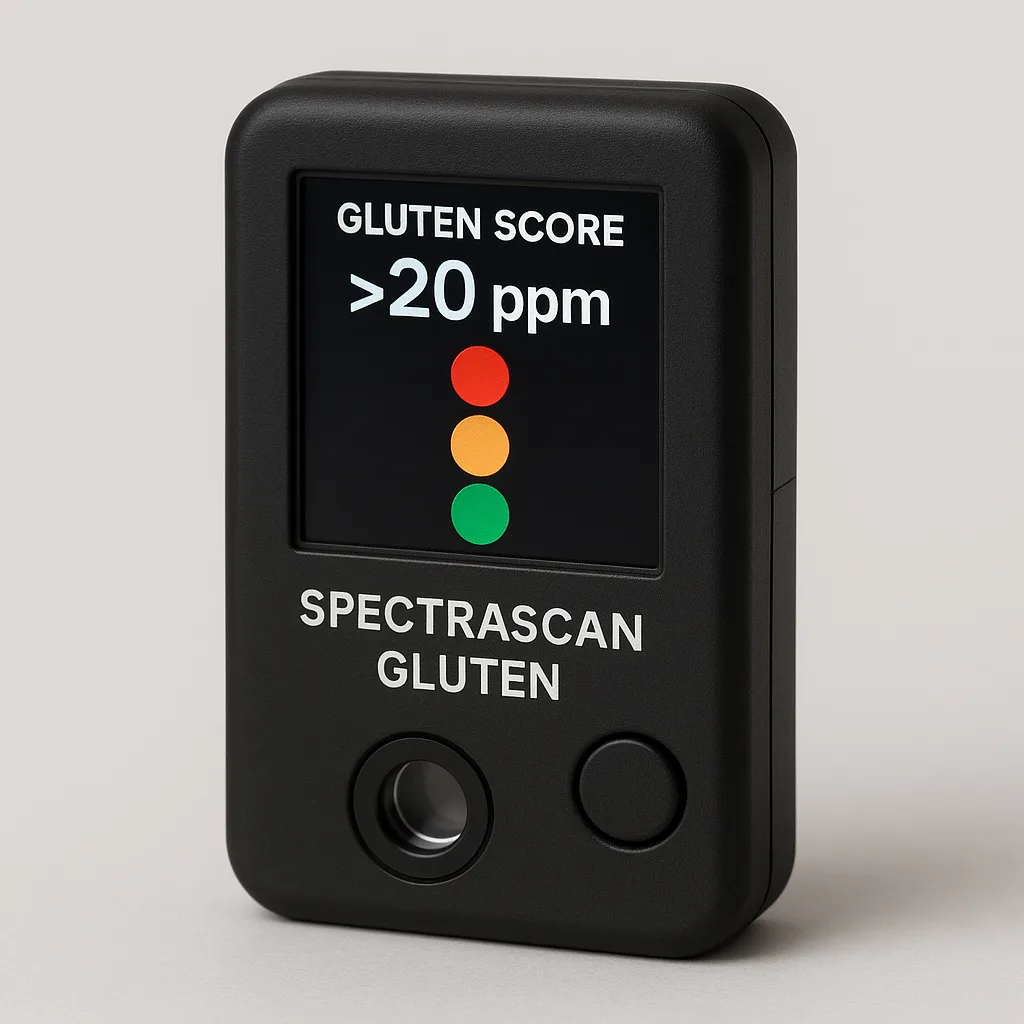
SpectraScan Gluten: the pocket-sized gluten detector for celiacs
For about seven years I have been living with celiac disease, a condition I was diagnosed with after a long period of widespread a...
Pubblicato da Simone Renzi