Telefono: 379 14 89 430
Orari: Monday to Friday, 9:00 a.m. to 6:00 p.m.



Telefono: 379 14 89 430
Orari: Monday to Friday, 9:00 a.m. to 6:00 p.m.
Electronic Design in Italy: Guide for Companies Developing New Products
6 July 2026

What is electronic design and why it's strategic for your business
Electronic design is the process that transforms a product idea into a working device. It's far more than drawing a circuit: it means defining how an object collects data, processes it, and communicates with the external environment or other systems. It's the invisible heart that enables a product to measure, control, connect, and make decisions.
The journey starts with a concept—defining what the product needs to do and the constraints it must work within: costs, power consumption, size, regulations. From there, you move to actual design, which encompasses several distinct phases.
- Specification definition: what functions the device must perform and under what operating conditions.
- Electrical schematic design: the logic that connects components and governs how they work together.
- Printed circuit board (PCB) development: the physical translation of the schematic into a buildable and manufacturable board.
- Prototyping and testing: building the first samples to verify that everything works as intended.
For a company looking to launch an innovative product, this activity isn't a technical detail to hand off at the last minute—it's a strategic choice. The decisions made during the design phase directly impact production costs, product reliability in the market, and its ability to stand out from competitors. A mistake corrected on paper costs little; the same mistake discovered after production starts can erode margins and damage your reputation.
The quality of an electronic product is largely determined before the first prototype is even built.
This is exactly where our Electronic Design service comes in: we partner with companies to turn a need into a concrete, implementable project, guiding them through the journey from concept to circuit. For those without internal technical expertise, having a partner at this stage means reducing risk and bringing a solid product to market, without needing to become an electronics expert yourself.
The phases of an electronic project: from schematic to PCB to prototype
Understanding the development phases of an electronic product helps you plan timelines, budgets, and expectations when working with a partner. Every project follows a structured path: skipping or rushing a phase rarely saves money—more often it creates costly errors that need to be fixed later. Here's what to expect, step by step.
- Requirements analysis: defining what the product must do, the constraints (size, power consumption, budget, regulations) and conditions of use. This is where the client and the designer align technical vision with business goals.
- Schematic design: the circuit's operation is translated into an electrical schematic that describes components and connections. It's the "architectural blueprint" of electronics.
- PCB layout: the schematic becomes a physical printed circuit board, with optimal placement of components and traces. Choices made here impact reliability, manufacturing costs, and performance.
- Firmware development: if the product is "intelligent," the software that controls the electronics' behavior and governs its functions is programmed.
- Prototyping and testing: the first physical sample is built and verified in the field, fixing any issues before moving to production.
How much time does it take? It depends on complexity: a simple project might take a few weeks, a complex one several months, often with multiple revision cycles. It's worth thinking of the prototype not as the finish line, but as a tool to validate choices and reduce risks before committing to production investment.
A good partner doesn't just deliver a circuit: they guide your company from initial idea through working prototype, reducing uncertainty and wasted time.
With this approach in mind, we offer an electronic design service that follows the entire process, from requirements definition through prototype realization. Having a single point of contact across all phases means fewer handoffs, greater consistency between schematic, PCB, and firmware, and an overall view that keeps project quality, timelines, and total costs under control.
Doing electronics design in Italy: the benefits of a local partner
When developing a new electronic product, choosing the right design partner affects timelines, costs, and the quality of the final result. Working with an Italian company, or more broadly with a nearby supplier, offers tangible advantages that are often overlooked in the initial phase but become clear once the project is underway.
The first benefit is proximity. Being able to meet the design team, review a prototype in person, or schedule technical reviews without time zone differences and intercontinental shipping speeds up every stage of the work. For a company based in Sicily, for example, having a partner for electronics development in Alcamo or the surrounding area means reducing the physical and organizational distance between the person with the idea and the one who transforms it into a working circuit.
The second advantage is communication. Sharing the same language, regulatory framework, and work culture reduces misunderstandings. Technical specifications are understood on the first pass, feedback arrives quickly, and decisions are made promptly. This is particularly valuable for entrepreneurs and non-technical managers who can discuss matters with their partner without feeling lost in technical jargon or held back by language barriers.
- Supply chain management: a local partner knows component suppliers, PCB manufacturers, and assemblers in the area, and can guide choices based on actual availability and realistic delivery times.
- Timeline control: proximity enables rapid iterations between design, prototype, and corrections, avoiding the long waits typical of remote collaborations.
- Post-project support: after delivery, there remains an accessible contact for updates, design revisions, or regulatory adjustments, without having to start over with a new partner.
Our electronics design service fits precisely into this context: direct support throughout product development, from specification review to circuit implementation, with the accessibility and continuity that only a nearby partner can guarantee. For a company, it means having someone working alongside you to follow the project over time, not just for a single engagement, but as a stable reference point for your product's future evolution.
From prototype to production: how an electronic device comes to life
Many companies view the prototype and production phases as two separate worlds: first you build a working sample, then you hand it off to someone who manufactures it at scale. In reality, it's a single continuous journey where every design choice influences the costs, timelines, and reliability of the finished product. Breaking this continuity is one of the most common causes of unexpected delays and revisions.
The prototype serves to answer a concrete question: does the device actually do what it's supposed to do, under real-world usage conditions? This is where functions are verified, power consumption is measured, critical components are tested, and errors are caught when fixing them still costs little. A good prototype shouldn't just work on the bench: it should anticipate the problems that will emerge when units number in the tens, hundreds, or thousands.
The transition to production therefore requires preparation work that is often underestimated. Some key areas to focus on:
- Component availability: verify that selected parts are available over time and not at risk of becoming obsolete;
- Cost optimization: redesign the project to reduce the per-unit price without compromising quality;
- PCB manufacturability: adapt the circuit to industrial assembly processes, not just manual fabrication;
- Test procedures: define how to verify each produced unit quickly and consistently.
Anyone who has been involved in the design already understands the product in detail and can manage this transition without losing information. This is the advantage of working with a single partner who guides the device from initial concept through to first production runs: design choices made in the early phase are already considered with manufacturing in mind.
Our electronic design service is built on this exact principle of continuity: we follow the device throughout its entire journey, so that the shift from prototype to first industrial units is a natural continuation of the work done, not a new project starting from scratch.
How to choose the right partner for electronic design
Entrusting the development of a new product to an external partner is a decision that affects timelines, costs, and the quality of the final result. Not all suppliers are alike: some simply execute pre-defined specifications, while others are capable of guiding your company from the initial concept all the way to a market-ready product. Before signing a contract, it's worth evaluating several concrete aspects.
Here are the most useful criteria to keep in mind during selection:
- Real and verifiable expertise: ask for examples of projects similar to yours in terms of industry, complexity, and volume. A solid partner can explain technical choices in a way that's understandable even to those without a technical background.
- Portfolio and concrete case studies: evaluate products that have actually reached the market, not just lab prototypes. This signals that the partner knows how to manage the entire journey, including production challenges.
- Ability to follow research and innovation: a good partner doesn't apply standard solutions, but studies the problem, proposes alternatives, and stays updated on constantly evolving components and regulations.
- Communication and continuity: verify how updates, revisions, and unforeseen issues are handled. Clear communication reduces misunderstandings and delays.
- Holistic vision: the ideal partner thinks about the finished product, not just the single board, taking into account costs, timelines, and industrial sustainability.
These elements help distinguish a simple contractor from a true partner, capable of transforming a need into a reliable and feasible product.
In this field RENOR & Partners offers Electronic Design services, designed to support companies that want to develop new devices with careful technical guidance and clear management of every project phase.
If you're evaluating the development of a new product, get in touch to tell us about your idea: discover how we can help by visiting the page dedicated to our Electronic Design service and request an initial consultation with no commitment.
Need concrete support? Discover our Electronic design service or contact us for a consultation.
Author
Simone Renzi
CEO at RENOR & Partners
Latest published articles
Tuesday, 15 September 2026
Development of a Custom Cloud Platform for SMEs: Practical Guide
Why should an SME choose a custom cloud platformMany small and medium-sized businesses start with st...
Pubblicato da Simone Renzi
Tuesday, 08 September 2026
Custom Web App: How to Choose the Right Company in Italy for Your Project
What is a custom web app (and why off-the-shelf software isn't enough)A custom web app is a bro...
Pubblicato da Simone Renzi
Monday, 07 September 2026
Custom ERP: How to Build a Management System Tailored to Your Company
Off-the-shelf ERP or custom management software: what's the differenceAn ERP (Enterprise Resour...
Pubblicato da Simone Renzi
Potrebbero interessarti anche
Tuesday, 18 August 2026
3D Printing Service for Companies: How It Works and When It’s Worth It
What is third-party 3D printing and who needs itThird-party 3D printing is a service where a company outsources the production of ...
Pubblicato da Simone Renzi
Monday, 17 August 2026
Software for managing business IoT devices: selection guide
Why Your Business Needs IoT Device Management SoftwareWhen a company has just a few connected devices, keeping them under control ...
Pubblicato da Simone Renzi
Sunday, 16 August 2026
Quote for an industrial telemetry system: what affects costs
What is an industrial telemetry system and what is it used forAn industrial telemetry system is a collection of devices and techno...
Pubblicato da Simone Renzi
Tuesday, 11 August 2026
How Much Does It Cost to Develop a Custom IoT Platform for Your Business
What Is a Custom IoT Platform (and Why Build One Tailored to Your Needs)An IoT platform is the set of components that allows physi...
Pubblicato da Simone Renzi
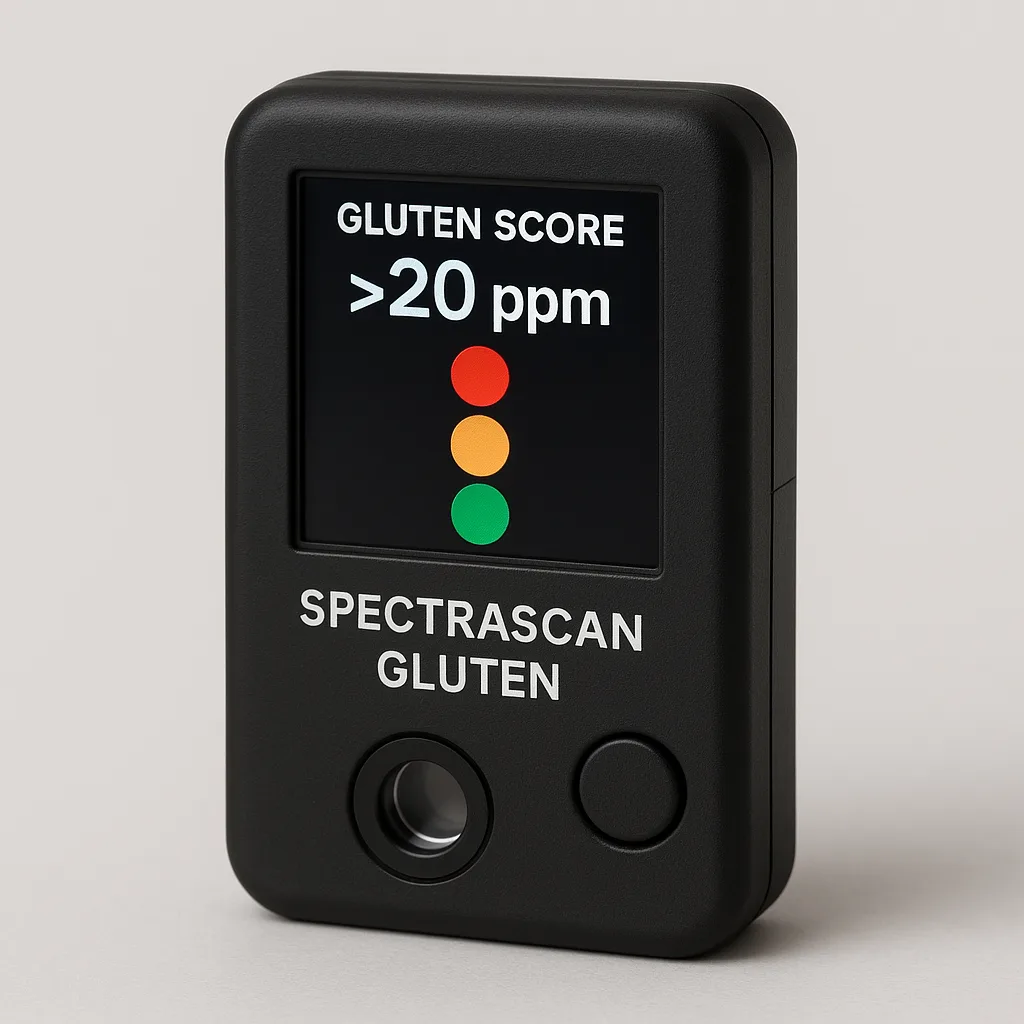
Sunday, 25 May 2025
SpectraScan Gluten: the pocket-sized gluten detector for celiacs
For about seven years I have been living with celiac disease, a condition I was diagnosed with after a long period of widespread a...
Pubblicato da Simone Renzi

Friday, 19 August 2022
Raspberry PI4 – Skyrocketing prices!
The Covid Pandemic has produced what has been dubbed “the silicon crisis.” Some electronic components such as processors have been...
Pubblicato da Simone Renzi