Telefono: 379 14 89 430
Orari: Monday to Friday, 9:00 a.m. to 6:00 p.m.



Telefono: 379 14 89 430
Orari: Monday to Friday, 9:00 a.m. to 6:00 p.m.
Quote for an industrial telemetry system: what affects costs
16 August 2026

What is an industrial telemetry system and what is it used for
An industrial telemetry system is a collection of devices and technologies that allows you to gather data directly from machines, plants, and equipment, then transmit it remotely to a central system where it can be viewed and analyzed. In practical terms, it means knowing in real time what's happening on a piece of machinery even when you're not physically standing next to it: temperatures, consumption rates, vibrations, operating hours, alarms, and operational status.
The value for a company doesn't lie in the data itself, but in the decisions that data makes possible. Here are the three areas where telemetry delivers concrete and measurable returns.
- Remote monitoring: you keep track of the condition of plants spread across multiple sites or installed at customer locations, reducing travel and response times.
- Predictive maintenance: by analyzing how parameters change over time, you intervene before a failure shuts down production, avoiding unexpected downtime and expensive repair costs.
- Operational efficiency: objective data on consumption and usage helps identify waste, optimize processes, and justify investments with real numbers.
Companies usually start evaluating this kind of project based on a specific problem: machinery that stops without warning, difficulty in collecting reliable data from plants, or the desire to offer customers a more advanced support service. If these issues apply to you, then a telemetry system is probably the right answer, and the next step is understanding what impacts the implementation costs.
Telemetry transforms a 'silent' plant into a source of information for those who need to make decisions.
It's important to remember that the heart of every telemetry system is the electronics that acquires and transmits the data: sensors, boards, and dedicated components must be designed for the specific environment in which they will operate. This is why electronic design is the foundation on which the entire system is built, and the choices made at this stage directly influence the reliability, lifespan, and overall costs of the project.
The components that make up a telemetry project
When requesting a quote, it's helpful to understand that a telemetry system is not a single product, but a chain of elements that must work together. Each component has a cost, but more importantly, it affects the complexity of the project and therefore the time needed to implement it. Let's see what they are, starting from the field all the way to the dashboard you'll have in front of you.
- Sensors: they are the starting point. They measure temperature, pressure, vibrations, consumption, levels or flow rates. The number, required precision, and environmental conditions (dust, humidity, extreme temperatures) directly impact the choice and price.
- Acquisition units: they collect signals from sensors and convert them into usable data. The more measurement points and the more heterogeneous the signals, the greater the complexity of this part.
- Connectivity: it's the way data travels. It can be wired (reliable but with installation costs), wireless (flexible but sensitive to obstacles) or cellular (useful for remote facilities, with recurring data traffic costs).
- Gateways: they act as a bridge between the field and the platform, collecting data from multiple sources and forwarding it in an organized and secure manner.
- Data collection software platform: it stores and organizes data over time, making it available for analysis and comparisons.
- Dashboards: they are what the end user sees, namely graphs, alarms and indicators that transform numbers into concrete decisions.
The real complexity arises from the fact that these components must be sized for your specific facility. A single machine isolated in a warehouse and a network of stations distributed across a territory require very different choices, even with the same data being collected.
Precisely in the part closest to the field—sensors, acquisition units and gateways—electronic design comes into play: defining the right hardware for your needs, instead of adapting off-the-shelf solutions, allows you to obtain a system that is more aligned with your work environment and measurement objectives. It's an aspect that, if handled well from the start, reflects on the reliability of the entire project.
What factors determine the cost of a quote
Two quotes for seemingly similar systems can differ substantially. The reason is that the final price depends on a range of technical and contextual variables, not on a standard price list. Understanding these factors helps you read an offer with a critical eye and identify where real value actually lies.
- Number and type of sensors: measuring temperature is one thing, detecting vibrations, pressure, electrical consumption, or quality parameters is another. More specialized sensors, as well as a large number of measurement points, directly impact hardware and wiring costs.
- Industrial environment: the presence of dust, humidity, extreme temperatures, vibrations, or explosion risk requires components with appropriate protections. A hostile environment demands more robust—and therefore more expensive—design choices.
- Distances and connectivity: the location of measurement points and their distance from the data collection hub determine whether wired or wireless connectivity makes sense. Covering large areas or buildings spread apart can increase infrastructure costs.
- Software customization: a standard dashboard costs less than an interface built on specific logic, with alarms, reports, and calculation rules tailored to your production process.
- Integration with existing management systems: connecting telemetry to ERP, MES, or other systems already in use requires dedicated development work. The older or more closed your systems are, the more time it takes to make them communicate.
- Certifications: some industries require compliance with specific regulations. Obtaining and documenting these certifications involves testing, verification, and costs that should be factored in from the start.
One often underestimated aspect is the electronic design of the devices. Opting for custom engineering, rather than adapting off-the-shelf components, allows you to properly size sensors, electronics, and power consumption against your actual needs. This is precisely the service we focus on, and it impacts the quote because it avoids unnecessary oversizing and reduces problems during installation and maintenance.
When comparing multiple quotes, therefore, don't stop at the bottom line: check which of these factors are included and at what level of detail. A transparent quote makes them explicit, enabling you to understand what you're paying for and why.
Off-the-shelf or custom-built solutions: how to choose
One of the most significant decisions affecting your quote is which path to take: starting with products already available on the market or developing a system specifically designed for your needs. There is no universally correct answer. The right choice depends on how much your requirements deviate from what ready-made solutions offer standard.
An off-the-shelf solution has clear advantages: fast deployment times, lower upfront costs, and a track record already proven by other companies. If you need to monitor common parameters, under ordinary environmental conditions and with non-critical volumes, it's often the most sensible approach. In these cases, most of the budget goes toward installation and setup, not development.
The picture changes when your requirements become specific. There are situations where catalog products fall short or force compromises that prove costly over time.
- Harsh environments: extreme temperatures, vibrations, dust, or aggressive substances that commercial devices cannot withstand.
- Integration with existing or proprietary equipment, where you need to communicate with systems that don't support standard connections.
- Space, power supply, or energy consumption constraints that make generic solutions impractical.
- Need to measure uncommon parameters or combine multiple signals in ways not foreseen by standard products.
When these elements come into play, a custom project stops being a luxury and becomes the most economically rational choice. Electronic design fits into this picture: developing the hardware around your actual needs, rather than forcing your needs into a product designed for others.
In terms of time and budget, customization involves a larger upfront investment and a longer development phase. However, it should be evaluated over the entire lifecycle: a system tailored to your process reduces corrective interventions, forced replacements, and inefficiencies that an approximate solution drags on for years. The practical advice is to start with an honest mapping of your real needs, so you can determine where the standard solution is sufficient and where customization truly pays off.
How to Request a Useful and Accurate Quote
A reliable quote starts with a well-prepared request. The more concrete information you provide at the outset, the closer the estimate will be to reality, with fewer revisions and surprises along the way. The goal isn't to produce complex technical documents, but to enable your supplier to truly understand what you need and in what context.
Before reaching out to a partner, it's worth gathering a few key elements. This preliminary work, even if informal, speeds up the analysis and allows you to get a more precise proposal from the very first discussion.
- Clear objectives: what you want to achieve (reduce downtime, monitor consumption, receive real-time alerts) and in what order of priority.
- Equipment and systems to monitor: quantity, type, age and location, so compatibility and distances can be assessed.
- Desired data: which parameters to measure (temperature, vibrations, production, energy) and at what sampling frequency.
- Existing infrastructure: presence of network, PLC, sensors already installed, connectivity and management systems to integrate with.
- Operational constraints: indicative budget, timelines, special environments (dust, humidity, extreme temperatures).
One often overlooked aspect concerns the points where data isn't yet available. Many machines, especially older ones, don't have outputs ready to be connected to a data collection system. In these cases, dedicated electronics design becomes necessary to create the boards and devices that make otherwise inaccessible parameters measurable. Flagging this in your request helps correctly frame both the costs and the timeline.
A quote is only as good as the information it's based on: describing your starting point well is the first step toward a realistic estimate.
Finally, don't hesitate to state what you don't know. A competent supplier will suggest an on-site visit or preliminary analysis to fill the gaps. It's better to invest a few days in initial assessment than to discover unforeseen requirements mid-project that extend timelines and increase costs. Mutual transparency at this stage is the best investment for your entire project.
Trust RENOR & Partners for Your Telemetry Project
After seeing which factors impact your quote and how to submit an accurate request, there's one decisive step left: choosing a partner capable of supporting you from the planning phase through to a working system. A telemetry project brings together diverse competencies, from the hardware that gathers data in the field to the software that makes it readable and actionable. Having a single point of contact who coordinates these areas reduces risks, eliminates finger-pointing, and delivers a more predictable overall cost.
At RENOR & Partners, we approach these projects starting from your business's concrete needs, without imposing cookie-cutter solutions from the start. Our goal is to understand what you need to measure, where, and how often, then translate that into a system tailored to your actual situation.
- Electronics design: we develop custom electronics for gathering data directly from the field, taking care of the hardware foundation that underpins every reliable telemetry system.
- Software and cloud: we build the solutions that collect, organize, and make data from your systems accessible and usable.
- IT consulting: we guide you through technical decisions, so that what you choose today remains sustainable in the future.
This blend of expertise allows us to work on both streamlined solutions and complex projects, scaling our effort to what truly matters. The quote you receive isn't a number handed down from above, but the result of a discussion where priorities and budget are factored in from the start.
If you're evaluating a telemetry system for your company, the best way to get a realistic estimate is to talk with those who design the electronics and develop the data collection software. Get in touch so you can walk us through your project: we'll analyze your goals and constraints together, and propose a clear roadmap with a quote built on your actual needs.
Need concrete support? Discover our Electronic design service or contact us for a consultation.
Author
Simone Renzi
CEO at RENOR & Partners
Latest published articles
Tuesday, 29 September 2026
Cloud Migration Consulting for Companies in Italy: Selection Guide
Why more and more Italian SMEs are migrating to the cloudFor years, many small and medium-sized Ital...
Pubblicato da Simone Renzi
Tuesday, 22 September 2026
Serverless Application Development for Enterprises: Strategic Guide to Benefits
What "serverless" means (explained without the jargon)The term "serverless" is o...
Pubblicato da Simone Renzi
Tuesday, 15 September 2026
Development of a Custom Cloud Platform for SMEs: Practical Guide
Why should an SME choose a custom cloud platformMany small and medium-sized businesses start with st...
Pubblicato da Simone Renzi
Potrebbero interessarti anche
Tuesday, 18 August 2026
3D Printing Service for Companies: How It Works and When It’s Worth It
What is third-party 3D printing and who needs itThird-party 3D printing is a service where a company outsources the production of ...
Pubblicato da Simone Renzi
Monday, 17 August 2026
Software for managing business IoT devices: selection guide
Why Your Business Needs IoT Device Management SoftwareWhen a company has just a few connected devices, keeping them under control ...
Pubblicato da Simone Renzi
Tuesday, 11 August 2026
How Much Does It Cost to Develop a Custom IoT Platform for Your Business
What Is a Custom IoT Platform (and Why Build One Tailored to Your Needs)An IoT platform is the set of components that allows physi...
Pubblicato da Simone Renzi
Monday, 06 July 2026
Electronic Design in Italy: Guide for Companies Developing New Products
What is electronic design and why it's strategic for your businessElectronic design is the process that transforms a product ...
Pubblicato da Simone Renzi
Sunday, 25 May 2025
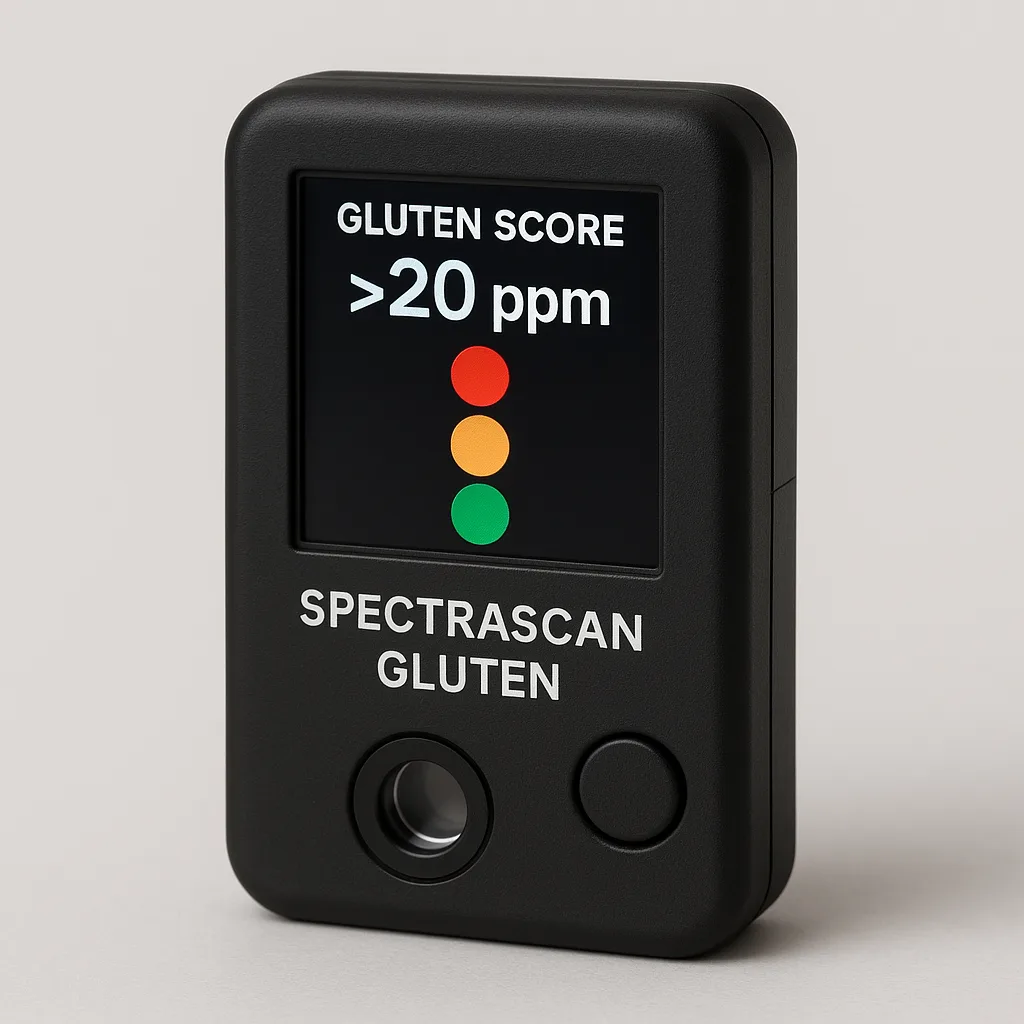
SpectraScan Gluten: the pocket-sized gluten detector for celiacs
For about seven years I have been living with celiac disease, a condition I was diagnosed with after a long period of widespread a...
Pubblicato da Simone Renzi

Friday, 19 August 2022
Raspberry PI4 – Skyrocketing prices!
The Covid Pandemic has produced what has been dubbed “the silicon crisis.” Some electronic components such as processors have been...
Pubblicato da Simone Renzi