Telefono: 379 14 89 430
Orari: Monday to Friday, 9:00 a.m. to 6:00 p.m.

Scegli quali categorie di cookie autorizzare. I cookie necessari sono sempre attivi per garantire sicurezza e funzionalità di base.
Telefono: 379 14 89 430
Orari: Monday to Friday, 9:00 a.m. to 6:00 p.m.


Telefono: 379 14 89 430
Orari: Monday to Friday, 9:00 a.m. to 6:00 p.m.

We believe that scientific research is the key to progress as a human species. That is why we invest time and resources in research projects that combine innovation, health, and sustainability.
AI & Machine Learning
IoT & Industry 4.0
Green Tech & Sustainability
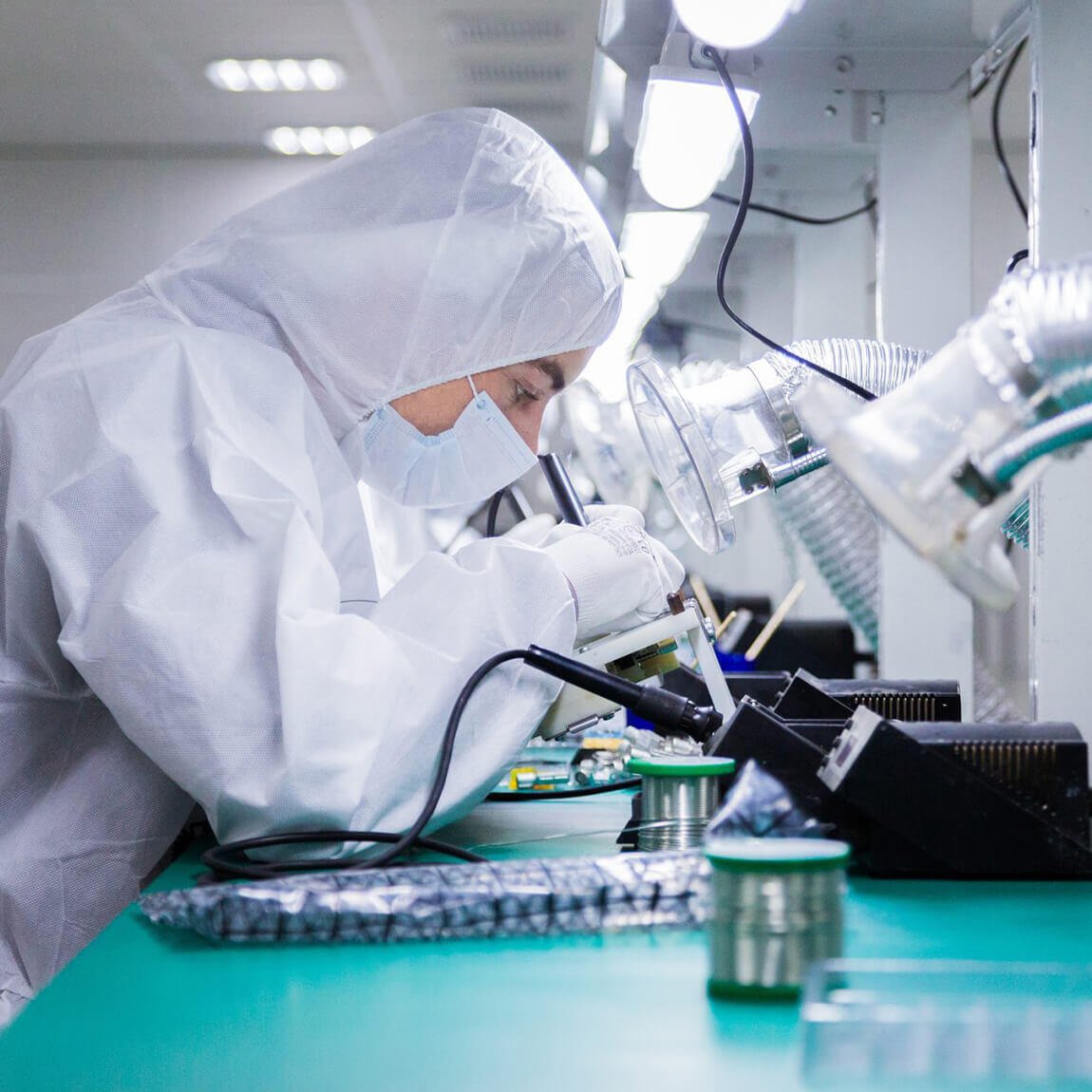
We transform scientific research into concrete innovation, translating academic and experimental results into technological solutions applicable to the real world.
We do not conduct research for its own sake: every project is geared towards technology transfer and the creation of tangible value for businesses.
We manage all phases internally, from design to technical and industrial validation, through to the creation of the product or service. Our approach stems from a solid academic background and direct experience of collaboration with universities and research institutes gained by the founder of RENOR.
Technology: Mobile app with AI and Computer Vision to detect gluten content from ingredient labels.
Features:
Technology: NIR spectroscopic analysis with chemometric models for gluten detection in food.
Innovation:
Technology: Mobile app that helps identify food intolerances by correlating food intake and symptoms.
Features:
Technology: Automated system for separate waste collection using computer vision, AI, and Raman spectroscopy.
Innovation:
Technology: IoT device for refrigerators that monitors food expiration dates and reduces food waste.
Features:


CeliachIA is the first app that automatically analyzes ingredients without human intervention.
Unlike all other available solutions, which simply display labels or require manual review, CeliachIA uses a complex artificial intelligence engine that reads, interprets, and evaluates the presence of gluten in ingredients in real time.
All you need is a photo of the label: no waiting for manual reviews, no reports to send. Just a clear and immediate response thanks to computer vision and intelligent recognition. It is the only app designed for those who need instant and reliable answers every day.
We believe in innovation as a driver of social progress. Scientific research allows us to explore emerging technologies, solve real problems (food safety, sustainability, health), and contribute to the scientific community. Many projects arise from personal challenges (e.g., CeliachIA to help those suffering from celiac disease) or social needs (Smart Waste to reduce pollution). It is our way of giving back to society.
Absolutely. We actively collaborate with the Politecnico di Milano, the University of Bologna, the University of Padua, and other centers of excellence. This synergy gives us access to advanced scientific expertise, well-equipped laboratories, and rigorous academic validation. We often co-publish scientific papers and participate in European (Horizon Europe) and national (PNRR) research projects.
It depends on the project. Some results are released as open source to maximize social impact (e.g., datasets, basic algorithms). Others, with commercial potential, are patented or protected to ensure economic sustainability and future developments. We always publish scientific results in peer-reviewed journals to share knowledge with the scientific community.
Our themes arise from concrete needs: health issues (food intolerances), environmental sustainability (smart waste collection), food safety (gluten detection), and food waste. We seek challenges where technology (AI, IoT, Computer Vision) can generate real and measurable impact. We also listen to proposals from partners, patients, associations, and citizens.
Not always, but it is a goal for some. CeliachIA and MyIntollerances have the potential to become consumer apps. SpectraScan Gluten could be adopted by testing laboratories. Smart Waste Classifier is designed for municipalities and waste management companies. However, basic research remains just that: it serves to validate concepts, publish results, and develop skills, not necessarily to generate immediate profit.
Yes! We are always looking for motivated collaborators: students working on theses (master’s, doctorate), researchers for scientific collaborations, beta testers to validate prototypes, associations to identify real needs. If you have skills (data science, IoT, chemistry, nutrition) or simply a passion for social innovation, please contact us. Many projects have been born from spontaneous collaborations.

RENOR & Partners S.r.l.
Via Cicerone, 15 - 00072 Ariccia (RM)
Partita IVA:
16768411007
16768411007
REA:
RM-1674420
Capitale sociale:
€ 10.000,00
Telefono
Follow us
/ Contacts /
Let's talk about your project
Contact us without obligation to request information: fill out the form and one of our consultants will call you back within 24 hours.
© 2026 RENOR & Partners S.r.l. | All rights reserved
Questo sito è protetto da reCAPTCHA e si applicano la Privacy Policy e i Termini di Servizio di Google.